

Hey there! As a supplier of end dump semi trailers, I often get asked a pretty important question: Can an end dump semi trailer be used for transporting hazardous materials? Let's dig into this topic and find out.
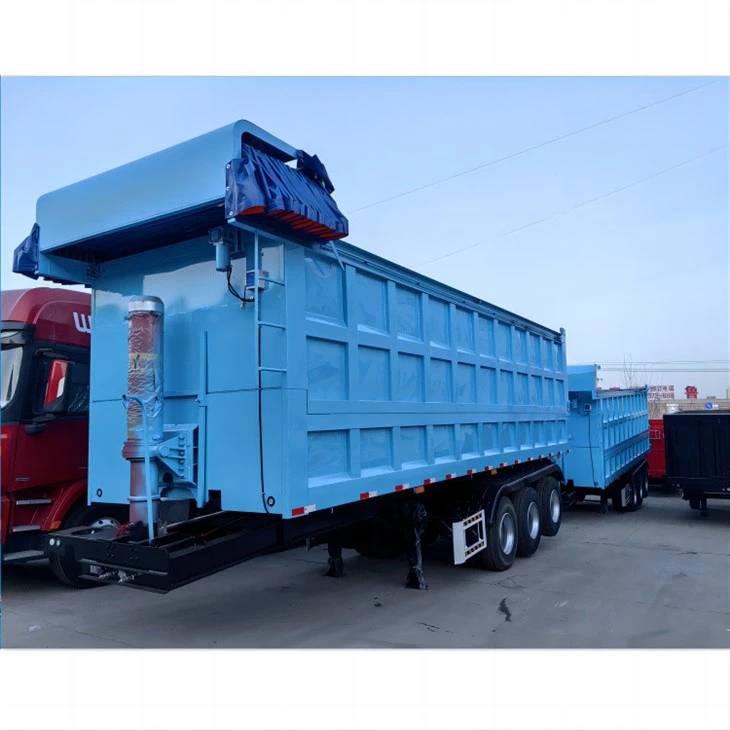

First off, let's talk about what an end dump semi trailer is. It's a type of trailer that's designed to unload its cargo by tilting the trailer up at the front end. This allows the materials inside to slide out the back. End dump semi trailers are commonly used for hauling things like gravel, sand, and other bulk materials. They're known for their efficiency in unloading large volumes of stuff quickly.
Now, when it comes to hazardous materials, things get a bit more complicated. Hazardous materials are substances that can pose a risk to health, safety, property, or the environment. This includes things like chemicals, fuels, and radioactive materials. Transporting these kinds of materials requires a whole different set of rules and regulations compared to regular cargo.
One of the main concerns with using an end dump semi trailer for hazardous materials is the potential for spills. When you're dealing with dangerous substances, even a small spill can have serious consequences. End dump trailers are designed to dump their contents in a relatively uncontrolled manner. This means that there's a higher risk of the hazardous material spilling out during the unloading process, especially if there are any issues with the trailer's hydraulic system or if the operator makes a mistake.
Another issue is the lack of proper containment. Hazardous materials need to be stored and transported in containers that are specifically designed to prevent leaks and spills. End dump trailers are typically open at the top, which makes it difficult to ensure that the hazardous material stays inside the trailer at all times. Even if the trailer has a tarp or some other form of cover, it may not be enough to prevent spills in the event of an accident or rough handling.
In addition to the risk of spills, there are also regulatory requirements that need to be met when transporting hazardous materials. These regulations are in place to protect the public and the environment. For example, trailers used for transporting hazardous materials need to be properly marked and labeled to indicate what kind of material is inside. They also need to have certain safety features, such as emergency shut-off valves and spill containment systems. End dump trailers may not be equipped with these features, which means they may not be compliant with the regulations.
However, that doesn't mean that it's completely impossible to use an end dump semi trailer for transporting hazardous materials. In some cases, with the right modifications and safety measures, it may be possible to use an end dump trailer safely. For example, the trailer could be fitted with a sealed container that's specifically designed for storing and transporting hazardous materials. This would help to prevent spills and ensure that the material stays contained.
The trailer could also be equipped with additional safety features, such as a secondary containment system or an emergency response kit. These features would help to minimize the risk of spills and ensure that the operator is prepared to handle any emergencies that may arise.
But even with these modifications, it's important to note that using an end dump semi trailer for hazardous materials is still a risky proposition. It's always best to consult with a professional who has experience in transporting hazardous materials to determine if an end dump trailer is the right choice for your needs.
Now, let's take a look at some alternatives to using an end dump semi trailer for hazardous materials. One option is a Belly Dump Semi Trailer. These trailers are designed to unload their cargo from the bottom, which can help to reduce the risk of spills. They also typically have a more enclosed design, which provides better containment for hazardous materials.
Another option is a Half Dump Trailer. These trailers are similar to end dump trailers, but they only dump half of the cargo at a time. This can help to reduce the risk of spills and make the unloading process more controlled.
If you need to transport large volumes of hazardous materials over long distances, a 13 to 17 meter semi-trailer may be a better choice. These trailers are larger and more stable, which can help to reduce the risk of accidents and spills. They also typically have more advanced safety features, such as anti-lock brakes and stability control systems.
In conclusion, while it may be possible to use an end dump semi trailer for transporting hazardous materials in some cases, it's generally not recommended. The risk of spills and the lack of proper containment make it a risky option. There are other types of trailers, such as belly dump trailers, half dump trailers, and larger semi-trailers, that are better suited for transporting hazardous materials.
If you're in the market for a trailer to transport hazardous materials, I'd be happy to help you find the right one for your needs. Just reach out to me, and we can have a chat about your specific requirements. Whether you're looking for a trailer that's safe, reliable, and compliant with all the regulations, I've got you covered. Let's work together to find the perfect solution for your hazardous material transportation needs.
References
- Department of Transportation. (n.d.). Hazardous Materials Regulations. Retrieved from https://www.fmcsa.dot.gov/
- Occupational Safety and Health Administration. (n.d.). Hazardous Materials. Retrieved from https://www.osha.gov/


