

Hey there! I'm in the business of supplying refrigerated trailers, and I know firsthand how crucial it is to pick the right one for your business. Whether you're in the food industry, transporting pharmaceuticals, or handling any other temperature - sensitive goods, choosing the right refrigerated trailer can make or break your operations. So, let's dive into how you can make that all - important decision.
Capacity and Size
First off, you've got to think about capacity and size. This is a no - brainer. You need to know exactly how much stuff you're going to be hauling. If you're a small - scale local food vendor, a smaller 5 ton 10 ton refrigerated truck [/refrigerated - trailers/reefer - trailer.html] might be just the ticket. These trucks are more maneuverable, perfect for navigating through city streets and making multiple stops.
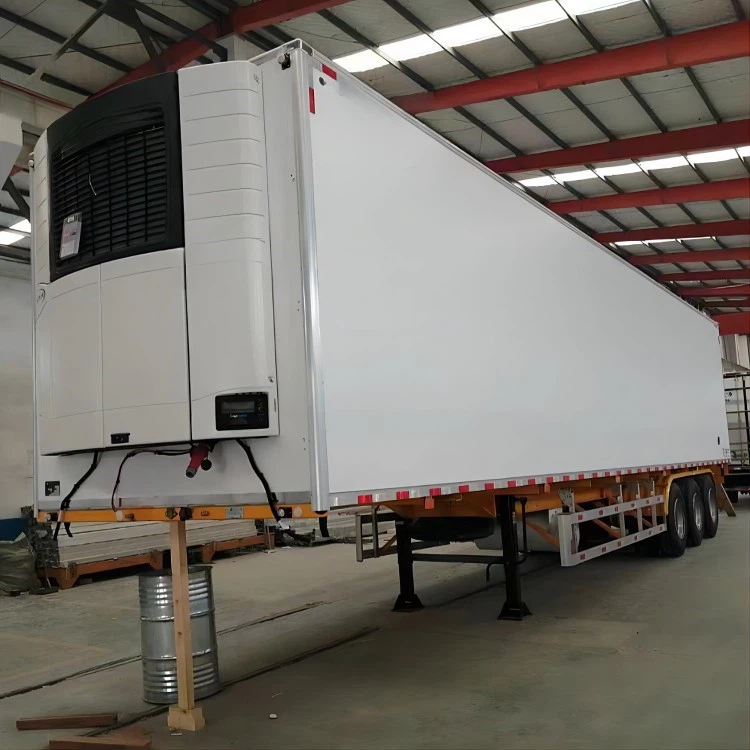
On the other hand, if you're a large - scale distributor sending goods across the country, you'll probably need a bigger rig. A 4 Axle Refrigerated Semi Trailer [/refrigerated - trailers/refrigerated - semi - trailer.html] can carry a much larger volume. It's like comparing a compact car to a semi - truck. The semi - trailer gives you the space to transport a significant amount of products in one go, which can save you time and money on multiple trips.
But here's the thing, don't just go for the biggest option available. You'll end up wasting fuel and money if you're not fully utilizing the space. Calculate your average load volume and add a little extra for growth. That way, you're covered in the short and long term.
Temperature Range
Next up is the temperature range. Different products require different temperature settings. For example, fresh produce usually needs to be kept at a slightly higher temperature, around 32°F to 40°F (0°C to 4°C). Meats and seafood, on the other hand, often need to be stored at much colder temperatures, sometimes as low as - 10°F to 0°F (- 23°C to - 18°C).
When you're choosing a refrigerated trailer, make sure it can maintain the specific temperature range your products need. Some trailers come with adjustable temperature controls, which is a great feature. It allows you to switch between different temperature settings depending on what you're hauling. This flexibility can be a real game - changer, especially if you're transporting a variety of products.
Insulation
Insulation is another key factor. Good insulation helps keep the cold air inside the trailer and the hot air out. It's like having a really thick winter coat for your products. A well - insulated trailer will use less energy to maintain the desired temperature, which means lower fuel costs for you.
Look for trailers with high - quality insulation materials. Foam insulation is a popular choice because it's lightweight and provides excellent thermal resistance. The thickness of the insulation also matters. Thicker insulation generally means better temperature retention. But keep in mind that thicker insulation can add some weight to the trailer, which might affect your fuel efficiency in a different way. So, it's all about finding that sweet spot.
Refrigeration System
The refrigeration system is the heart of the refrigerated trailer. You want a reliable and efficient system. There are two main types: diesel - powered and electric - powered systems.
Diesel - powered systems are great for long - haul trips. They're independent of external power sources, so you can keep your products cold no matter where you are. However, they do require regular maintenance and can be a bit noisy.
Electric - powered systems, on the other hand, are more environmentally friendly and quieter. They're ideal for short - distance trips or when you have access to an electrical outlet, like at a distribution center. But if you're on the road for long periods without access to electricity, this might not be the best option.
Maintenance and Durability
Let's talk about maintenance and durability. You don't want to be stuck on the side of the road with a broken - down trailer. Look for trailers that are built to last. Check the construction materials. Steel frames are strong and durable, but they can rust over time. Aluminum frames, on the other hand, are lightweight and resistant to corrosion.
Also, consider the ease of maintenance. Some trailers have more accessible components, which makes it easier and cheaper to perform routine maintenance. And don't forget about the warranty. A good warranty can give you peace of mind and save you money on unexpected repairs.
Cost
Cost is always a big factor. You've got to balance your budget with the features you need. A high - end trailer with all the bells and whistles might be great, but it could also break the bank. On the other hand, going for the cheapest option might end up costing you more in the long run if it's not reliable or efficient.
When calculating the cost, don't just look at the purchase price. Consider the operating costs, such as fuel, maintenance, and repairs. A slightly more expensive trailer with better fuel efficiency and lower maintenance costs could actually save you money over time.
Regulatory Compliance
Finally, make sure the trailer you choose complies with all the relevant regulations. Different regions have different rules regarding the transportation of temperature - sensitive goods. This could include things like temperature monitoring requirements, safety features, and emissions standards.
Non - compliance can result in hefty fines and legal issues, so it's not something to take lightly. Do your research and make sure the trailer you're considering meets all the necessary regulations.
In conclusion, choosing the right refrigerated trailer for your business is a big decision. It requires careful consideration of factors like capacity, temperature range, insulation, refrigeration system, maintenance, cost, and regulatory compliance. But if you take the time to do your homework, you'll find a trailer that meets your needs and helps your business thrive.
If you're in the market for a refrigerated trailer, I'd love to help you find the perfect one. Just reach out, and we can have a chat about your specific requirements. Let's work together to get your products transported safely and efficiently.

References
- Transportation Research Board. (20XX). Guidelines for Refrigerated Freight Transport.
- National Institute of Standards and Technology. (20XX). Energy - Efficient Refrigeration Systems for Trailers.


